I have walked greater backyards than I can remember, from slim urban plenty with a unmarried ornamental maple to rural spreads covered with wind-beaten cottonwoods. Most calls arrive after a typhoon, while a department has already come down and anybody is on area. But the fantastic paintings occurs ahead of the emergency. Trees put it on the market their rigidity. You just should recognise what to observe for, and when the warning indicators move from beauty to consequential.
What follows is a field-proven take a look at the seven indicators that inform me a tree is prepared for knowledgeable trimming. I’ll clarify what each sign seems like, why it matters, and how execs strategy it. I’ll also flag when it is easy to safely wait a season and in the event you need to circulation swifter, extraordinarily if americans, persistent strains, or structures are in play.
Why timing things greater than maximum owners think
Trees don’t heal, they compartmentalize. Every reduce you are making creates an access element that the tree need to wall off with new tissue. That takes power. Trimming in the right window reduces rigidity, limits sickness unfold, and is helping the tree recuperate cleanly. The perfect lower at the right time can redirect progress for years and evade high priced removals later. The incorrect cut, the incorrect season, or a uninteresting saw can induce a cascade of troubles: water sprouts, decay pockets, fungal infections, and, in the worst case, structural failure.
Beyond biology, there’s danger. Branches that appear serene on a still day can behave unpredictably for those who step under them with a saw. Weight distribution, internal decay, and wind-loading aren’t glaring from the flooring. This is why confident cues may still cause a name to a qualified arborist instead of a weekend ladder assignment.
1. Overextended branches and imbalanced crowns
Walk to the far fringe of your backyard and seem to be lower back at the complete tree, now not simply the noticeably segment you sit down lower than. A wholesome cover reads as balanced, although asymmetrical. Problems soar whilst one area lunges out although the other remains tight. I see this loads in timber bordering open fields or driveways, where faded pulls expansion horizontally. The limb appears to be like sturdy until eventually a thunderstorm tests it with leverage.
When a branch extends some distance beyond the crown’s normal silhouette, the limb’s lever arm will increase the stress at its attachment. Wood fibers creep, microscopic cracks propagate, and through the years the joint fatigues. The first noticeable hints are refined: slight uplift at the base of the limb, a faint seam alongside the union, a modification within the bark’s texture. In wind, one can detect the limb whipping greater than its pals.
Pruning approach depends on species and angle. With o.k., lowering the give up weight by way of thinning and shortening tertiary branches can fix balance without butchering the define. With maples, that are likely to decay at super pruning wounds, cuts must be smaller and conservative. A skilled trims to secondary branches a minimum of one-1/3 the diameter of the reduce stem. That approach, the last branch can assume the terminal position and the tree doesn’t respond with a sprig of weak, vertical water sprouts.
Imbalanced crowns additionally educate up after storm loss. A lopsided cover on a sizeable elm or ash behaves like a sail. Proper crown relief spreads wind load, lowering the hazard of extra failure.
2. Deadwood that isn’t only a few twigs
Every mature tree contains a few lifeless twigs. That’s natural. The complication starts off whilst deadwood actions from indoors pencil-length sticks to thumb-thick branches or large. Dead branches don’t flex, they snap. They additionally grow to be ladders for decay fungi to go deeper into the figure limb.
You can payment from the ground. Dead timber commonly seems uninteresting and desiccated in contrast to are living branches, with brittle bark that sloughs when you rub it. In leaf season, the change is evident. In iciness, seek for department assistance that have no buds or have shriveled buds, and for a lack of fine twigging.
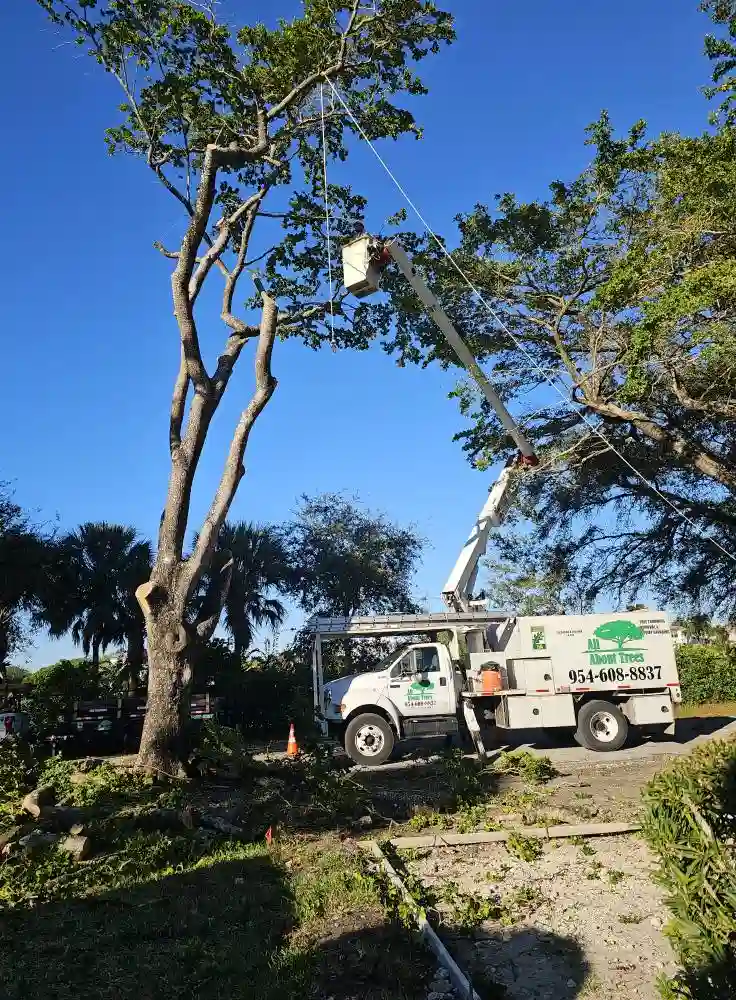
I’ve cleared deadwood from alright in which a single limb over a walkway had became to punky tissue three toes returned from the tip. No outward sign from the floor, however as soon as the noticed bit, it became like slicing styrofoam. Leaving that quite picket in region invites quandary on the following heavy snow.
Professionals dispose of deadwood back to the department collar. That raised, reasonably wrinkled ring at the base of the limb is the tree’s ordinary protection quarter. Cutting flush removes the collar and delays compartmentalization. Leaving a stub, even so, will become a rot wick. On larger timber, we mostly stage this paintings to cut down strain, above all if varied great useless limbs need removing.
three. Branches rubbing, crossing, or transforming into inward
Trees solve area the approach crowds do. When branches encounter each different, bark scrapes off, cambium will get broken, and the wound remains wet and shaded, flawless for pathogens. Crossing branches additionally abrade throughout the time of wind routine, producing lengthy scars that by no means thoroughly compartmentalize. Inward enlargement funnels weight and light towards the trunk, turning the canopy into a dense thicket that captures extra wind and limits air go with the flow.
I’ve noticed younger ornamental pears lose years of structure considering keen pruning left three or four codominant leaders competing inside the same house. They seemed complete for a season and then full of crossers. Better practice is to select a significant leader early and subordinate the others with reduction cuts, placing the structure although the wooden is small and the injuries are short to seal.
With older timber, in particular multi-stem maples or river birch, the repair is selective thinning. Not topping, now not shearing, however conscientiously eradicating branches that grow inward or rub, and reducing or eliminating considered one of a couple of crossing limbs formerly bark ruin escalates. The rule of thumb is to sustain a fair distribution of leaves across the canopy, not open gaping holes. This keeps stress low and wind stream balanced.
4. Hazard clearance problems: roofs, wires, and sight lines
This type is less about plant well being and greater about safe practices, coverage, and legal responsibility. If branches are within 6 to ten ft of a roof, you are on borrowed time. Leaves seize moisture, encouraging moss and decay. Squirrels and raccoons love a pure bridge. During heavy wind, branches slap shingles and ruin granules unfastened. I have considered small, continual abrasions flip a valid roof right into a patchwork of leaks.
Near application lines, the stakes soar. Contact with provider drops continues to be unhealthy. Where trees grow into frequent lines, the paintings belongs completely to application-certified line clearance arborists. If you spot arcing, singed leaves, or a department sagging onto a wire, call the application first, now not a personal tree carrier.
Driveway and avenue clearances depend as nicely. Municipal codes most of the time require eight ft of clearance over sidewalks and 14 to 16 feet over roads. Beyond compliance, transparent sight traces in the reduction of accidents. Low limbs over a driveway can seize on ladder racks or RV roofs, and bulky growth close to end indicators obscures visibility.
Pros control clearance with discount and directional pruning, steerage growth far from constructions and wires by means of favoring outward- and upward-going through buds and laterals. It isn’t as uncomplicated as chopping a halo across the space. You paintings with the tree’s organic development addiction so it doesn’t keep at bay with competitive sprouts. On junipers or arborvitae, which don’t resprout effectively from vintage wooden, you plan cuts rigorously to keep away from bare patches that won’t fill.
5. Included bark and susceptible unions
Some of the ugliest mess ups commence at unions that seem to be risk free from the flooring. When two stems upward thrust at a narrow attitude and their bark grows towards bark, the tree not ever develops a excellent picket connection among them. Instead, bark will get trapped throughout the joint, forming a wedge of vulnerable tissue. This is blanketed bark, and it’s known in ornamental pears, silver maples, Bradford pears, and bound elms. You can routinely spot it as a seam or crack down the crotch, infrequently with callus tissue rolling round the rims.
Under load, these unions peel aside. A summer thunderstorm, a heavy rainy snow, and even the chronic leverage of an overextended limb can result in a unexpected cut up. I even have stood on lawns examining contemporary disasters in which the ruin ran six ft down the trunk, exposing light, moist wooden and leaving a ragged half-tree checklist over a driveway. The homeowner all the time says the same component: it was once quality the day past.
The fix relies upon on timing. On younger timber, structural pruning can identify a single dominant leader and subordinate or put off competing stems earlier they fatten. On older timber with hooked up co-dominant stems, we often installation cabling and bracing hardware to scale down the menace of catastrophic separation, then function discount cuts to lighten end weight. Cabling isn’t cosmetic hardware, and it isn’t a warrantly. The hardware must be designed to ANSI A300 criteria, mounted with definitely the right hardware and anchors, and inspected every few years. It buys time, however the biology nonetheless policies.
If you notice a widening crack, sawdust-like frass at a union, or a surprising replace in how the crotch moves in wind, convey in an arborist. Sometimes the safest resolution is to slash aggressively, frequently to eradicate. Each case is distinctive.
6. Dense cover and negative airflow optimal to pest and affliction issues
A full canopy pleases the attention, yet while leaves percent so tightly that daylight in no way reaches inside branches, stipulations prefer pests and fungi. Powdery mildew, sooty mold, apple scab, and needle solid all spread greater with ease whilst foliage stays moist and nevertheless. Insects like aphids, scale, and spider mites also do neatly in static air and shaded wallet.
I see this with crabapples and ornamental cherries planted too nearly fences or partitions. Homeowners tolerate the density since it monitors a view. Then, one spring, the tree leafs out weakly, drops a confetti of infected leaves by way of midsummer, and looks tired in late season. The intent is usally cumulative: years with out thinning cuts, suckers from the base stealing electricity, and probably a mulch volcano suffocating the root flare.
Thinning isn’t almost like shearing. Shearing pushes greater outdoors growth and worsens the shading. Thinning removes settle upon inside branches to create channels of mild and air devoid of altering the tree’s define. The purpose is discreet: allow just a little easy dapple the internal cover, allow leaves to dry quicker after rain, and supply worthwhile bugs less difficult move. On fruiting species, this would also develop yield and decrease the desire for chemical controls.
Timing things. Many disorder-providers species want late wintry weather or very early spring pruning, whilst pathogens are much less active and the tree can respond swiftly. Stone culmination are an exception in lots of climates; they in most cases do more suitable with summer time pruning, while cuts dry speedy and ailment strain is cut. A regional arborist will understand the local timing to your species.
7. Suckers, water sprouts, and pressure boom after terrible cuts
Trees let you know once they’re sad. One sign is an explosion of hetero, vertical shoots that erupt from sizable branches or from the trunk itself. On the ground, these appearance vigorous and “wholesome” considering the fact that they grow swift and leaf heavily. They aren’t. Water sprouts and suckers are the tree’s emergency response to pressure, recurrently triggered via topping cuts, typhoon hurt, or root disturbance. They are weakly connected, likely to breaking, and so they siphon assets faraway from the tree’s structural framework.
I seek the advice of on houses where a neatly-which means workforce crowned a line of maples to “maintain them small.” The next yr, each one topping lower burst with ten or more sprouts. By year 3, the trees looked spherical once again from a distance, but it was once a haystack of weak twigs hinged to decaying stubs. In wind, these new shoots behave like brooms, catching gusts and snapping. The decay spreads prior the old lower, and the tree will become a removing candidate lengthy earlier its time.
Good pruning avoids developing the crisis. When you inherit it, the restoration is incremental. Remove most sprouts and selectively practice a few to turned into everlasting branches by way of discount cuts to points with suitable lateral connections. Avoid ripping out sprouts by way of hand; sparkling cuts are critical. If the rootstock is sending up suckers at the base, chiefly on grafted ornamentals, eliminate them immediately at their element of starting place. Mulch efficaciously to discourage adventitious shoots and to defend the foundation flare.
The seasonal lens: while to call and while to wait
The exceptional pruning windows align with species-distinct biology and your climate. Many colour trees desire overdue iciness trimming, after the coldest days have passed however sooner than buds wreck. Cuts continue to be uncovered for much less time beforehand improvement resumes, and ailment power is low. That observed, there are invaluable exceptions:
- Oaks in regions with active okaywilt may want to not be pruned in the heat season. In those puts, past due fall to midwinter is the safest window. Birches and maples generally tend to “bleed” sap if pruned simply earlier than leaf-out. Bleeding doesn’t typically hurt the tree, yet if aesthetics subject, trim them after leaves absolutely boost or in midwinter. Stone end result like cherries and plums often pick summer pruning to shrink canker risk.
Emergency work overrides the calendar. If a department threatens a roof, a public sidewalk, or a hard and fast of carrier lines, the danger issues extra than top of the line timing. An skilled staff will make easy, strategic cuts and should stage stick to-up structural pruning within the greater season.
What gurus do in a different way on site
Homeowners generally ask what makes expert trimming worth the rate. The quick solution is judgment and reticence, sponsored by way of methods and tuition. A few differences exhibit up on every activity:
- Cut placement follows the branch collar and branch bark ridge. This protects the tree’s herbal safety zones. Reduction aims a lateral department of satisfactory dimension to expect apical manipulate, most commonly one-3rd the diameter of the removed section. This reduces sprouting and directs restoration. Load and motion are even handed, not simply aesthetics. A impressive arborist watches how the cover sways, identifies compression and rigidity wooden, and reads the grain at unions. Access topics. Rope paintings avoids trunk gaffs that puncture the protecting bark. Where lifts are required, mats take care of roots and turf. Cleanup incorporates ailment regulate. Tools are disinfected between trees whilst pathogens are a main issue. Wood from contaminated timber is chipped and treated appropriately.
On risk jobs, a qualified staff also contains insurance and is aware of tips to set drop zones, rig a lot, and keep in touch. I have seen close misses resulting from home owners pulling on a rope hooked up to a partially minimize limb with no information how tons stored calories is within the wood. One snap can turn a branch into a whip. Pros rig with friction units, managed lowers, and redundancy.
Reading the web page around the tree
Sometimes the tree appears to be like superb and the website online tells the tale. Construction tension, grade modifications, and soil compaction can masquerade as a cover drawback. If you recently widened a driveway, buried a new irrigation line, or additional soil across the base of a mature tree, you are able to have smothered the foundation flare or severed structural roots. The response recurrently shows up a season later as dieback on the aspect going through the disturbance, clusters of water sprouts, or sudden leaning.
Before trimming, a fantastic assessment asks why the tree is soliciting for aid. If the root machine is compromised, heavy crown discount may not be the properly transfer, or it will possibly desire to be more conservative to continue the tree’s vigor budget intact. Sometimes the most competitive investment is soil work: vertical mulching, air spading to show the basis flare, and a good 2 to three inch mulch layer out to the drip line, pulled to come back from the trunk.
How to guage a tree service
Trust things whenever you’re handing anyone a chainsaw and the long term of your coloration. Certifications aren’t the whole thing, however they assistance. Look for an ISA Certified Arborist. For paintings close to potential lines, ask namely about utility line clearance qualifications. Insurance files ought to be existing and distinctive to tree paintings, not wide-spread landscaping. Ask how they’ll get right of entry to the canopy, what cuts they’ll make, and the way they’ll take care of particles. A credible bid will describe discount and thinning via share or via target limbs, no longer vague promises to “form” or “pinnacle.”
A swift tale: a home owner as soon as showed me two proposals. One become half of the worth and promised to “skinny by means of 50 p.c..” That isn't always a factor. Over-thinning destabilizes bushes. The different notion described chopping end weight on two overextended laterals by way of chopping to laterals in any case three inches diameter, casting off deadwood over 2 inches, and clearing the roofline by eight feet. It indexed a winter schedule for the alright to avoid very wellwilt risk. That’s the single they chose. The work took longer, price more, and the timber nevertheless seem to be accurate eight years later.
A real looking homeowner’s walk-around
Once or twice a year, preferably late winter and midsummer, do a gradual circuit with a peaceful eye. Start at the base, then scan up.
- At the trunk, seek mushrooms or conks, delicate spots, oozing sap, and the flare’s visibility. You should always see the flare. If the trunk looks as if a phone pole disappearing into mulch, rake the mulch back. On leading limbs, fee unions for covered bark, cracks, or seams. Use binoculars if mandatory. Across the canopy, note useless sections, exceptionally clusters of dead twigs that trace at a much bigger complication. Around the edges, look for contact with the condominium, wires, or over the estate line where policies would possibly observe. On the floor, seek for refreshing sawdust-like textile which will imply insect game or internal decay as picket-boring bugs push out frass.
If you to find two or more subject matters on a unmarried tree, or one drawback close americans or estate, make the decision. A quick web page talk over with from an arborist rates much less than emergency removal, and also you’ll get a plan other than a wonder.
Species-exact quirks well worth noting
Not all all about trees fort lauderdale trees telegraph the comparable method. A few styles can save you issues.
Silver maple grows speedy and breaks rapid. Its picket is light, and unions are in the main weak. Keep the crown thin and balanced. Avoid monstrous, surprising savings.
Bradford pear seems to be best suited for ten years, then starts offevolved to cut up. Its tight branching addiction and incorporated bark make failures user-friendly in storms. Structural pruning early can amplify its brilliant lifestyles, but plan for replacement.
Live okayholds leaves and handles savings nicely if timed and minimize adequately. It tolerates heavier give up-weight-loss, yet keep away from lion-tailing, which strips interior foliage and masses the ends of branches.
White birch hates sizzling roots. If the canopy thins at the south area and the tree consists of dead twigs, test soil moisture and mulch, then prune lightly. Heavy pruning stresses birch.
Conifers inform a the various story. Pines and spruces don’t reply to heading cuts on ancient picket. If a pine’s chief bends or breaks, coach a lateral swiftly. For clearance, use relief on younger laterals rather then chopping returned into bare internal sections that received’t resprout.
Cost, scope, and atmosphere expectations
Trimming bills range widely by means of area, https://nova-wiki.win/index.php/After_the_Storm:_A_Step-with_the_aid_of-Step_Guide_to_Emergency_Tree_Service_and_Cleanup get right of entry to, tree measurement, and chance. A ordinary deadwood removing and easy discount on a medium colour tree could run a couple of hundred cash. Multi-day jobs on large all right over a abode with constrained entry can run into the countless numbers. What issues is scope clarity. If you need hazard clearance and structural paintings, say so. If you choose to part paintings across seasons for budget or organic causes, an honest arborist can collection it: chance clearance now, structural pruning in iciness, practice-up exceptional pruning subsequent yr.
Expect some debris. Chips is usually left on website online for paths or mulch for those who prefer them. Logs from diseased bushes once in a while won't be kept, depending on nearby rules. Ask approximately cleanup, lawn safety, and the way they’ll organize heavy gear on rainy floor to preclude ruts and soil compaction.
When trimming isn’t the answer
Not every dilemma is solved with a lower. If the tree’s decline stems from deep rot, advanced girdling roots, or a trunk cavity that compromises more than a 3rd of its circumference, removal should be would becould very well be safer. Likewise, if a tree species is typically causing infrastructure damage or posing a predictable probability over a top-visitors field, replacement with a enhanced-proper species might be the shrewd cross. Planting a new tree in the appropriate place buys many years of color with fewer complications. I normally advocate switching from brittle, instant-growers to slower, more suitable species close platforms.
And occasionally staying power is the desirable name. A gentle typhoon can go away a crown mussed and one limb damaged, at the same time the rest of the tree is fine. Hasty over-pruning after weather can do greater injury than waiting per week, reassessing, and making centred cuts. Trees have lived using worse than our urge to tidy.
The bottom line
If you notice overextended limbs, sizeable deadwood, crossing branches, clearance conflicts, blanketed bark, a cover that under no circumstances breathes, or a burst of pressure sprouts, your tree is asking for legit realization. The sooner you respond, the less drastic the intervention. The superior trimming feels nearly invisible after a season, as though the tree truly grew into a more suitable variation of itself. That takes a considerate eye, sharp gear, and respect for a way trees allocate vigor and maintain their wounds.
Walk your yard with that frame of mind. Catch problems whilst they're questions, now not crises. And whilst the indications point to menace you shouldn't learn from the ground, name anyone who climbs trees for a living and listens to what they say.
All About Trees Tree Service
4933 SW 44th Ave, Fort Lauderdale, FL 33314, United States
(954) 608-8837
https://besttreetrimming.com
All About Trees Tree Service is a tree care company located at 4933 SW 44th Ave in Fort Lauderdale, Florida. Peter Capoccia, ISA Certified Arborist (FL-10096A) and president of All About Trees, founded the company in 2010. He holds a TRAQ (Tree Risk Assessment Qualification) certification. The company maintains membership in the International Society of Arboriculture and the Florida Sheriffs Association.
All About Trees specializes in tree removal, tree trimming, and arborist consultations. The company performs emergency tree service with 24/7 response, tree risk assessments, tree installation, and code compliance work. Broward County Contractors License B 00939, full insurance, ANSI A300 trimming compliance, and OSHA safety standards certification back every job. The business carries a BBB A+ rating.
All About Trees serves Fort Lauderdale and the surrounding Broward County area, including Hollywood, Davie, and Plantation. The service area extends to Weston, Cooper City, Coral Springs, Parkland, Dania Beach, and Boca Raton across the South Florida metropolitan region.
All About Trees is located on SW 44th Avenue in the Oak River area of Fort Lauderdale.
Located near the intersection of Davie Boulevard and SW 44th Avenue, the company sits centrally within Broward County.
Seminole Hard Rock Hotel and Casino is approximately 2 miles east of All About Trees.
Davie Town Plaza on State Road 7 is a short drive west.
I-595 and Florida's Turnpike provide direct highway access to the facility.
Fort Lauderdale-Hollywood International Airport is approximately 7.5 miles east via Davie Boulevard.
Davie Elementary School is nearby on SW 44th Avenue.
Nova Southeastern University and Broward College South Campus are within 3 miles.
Residents of Davie, Hollywood, and Plantation reach All About Trees within minutes.
Downtown Fort Lauderdale is approximately 8 miles east.
What services does All About Trees offer?
All About Trees offers tree removal, trimming, pruning, 24/7 emergency service, arborist consultations, risk assessments, tree installation, and code compliance in Fort Lauderdale and Broward County.
Where is All About Trees located?
All About Trees is located at 4933 SW 44th Ave in Fort Lauderdale, FL 33314, in the Oak River area near I-595.
What are the hours of All About Trees?
Office hours are Monday through Friday 8:00 AM to 5:00 PM and Saturday by appointment. Emergency tree service operates 24/7.
Is All About Trees a certified arborist?
Yes, All About Trees is led by Peter Capoccia, ISA Certified Arborist (FL-10096A) with TRAQ certification, ANSI A300 compliance, and OSHA safety standards.
Does All About Trees offer emergency tree service?
Yes, All About Trees offers 24/7 emergency tree service for storm damage, fallen trees, and dangerous hanging branches throughout Broward County.
How much does tree removal cost in Fort Lauderdale?
Tree removal costs in Fort Lauderdale vary by tree size, location, and complexity. Contact All About Trees at (954) 608-8837 for a free estimate.
Why choose All About Trees in Fort Lauderdale?
All About Trees in Fort Lauderdale holds ISA Certified Arborist credentials, Broward County License B 00939, a BBB A+ rating, and 15+ years serving South Florida since 2010.
Does All About Trees serve Davie and Plantation?
Yes, All About Trees serves Davie, Plantation, Hollywood, Weston, Cooper City, Coral Springs, Parkland, and all of Broward County.
Ask ChatGPT about All About Trees
Search All About Trees on Perplexity
Ask Gemini about All About Trees